Sunday, 25 October 2015

North East India and music; ten bands you should know about

Resting on the hilly terrains of the east khasi hills, Shillong is the capital city of Meghalaya, which is famous not only for its picturesque landscape and its commonly known insignia “Scotland of the east,” but also fancied as the rock capital of India. The NE region is a land of vast diversity, yet the people have two things in common that hold the diverse culture at sync; that is western music and its culture & tenet. NE is toured by various international bands every year during the winter season. Legendary bands like Scorpions, Mr. Big, White Lion, M.L.T.R, Firehouse, Lost Angel, Petra, and many other famous bands such as Hoobastank have visited the country’s rock capital with courteous ethics and rock and roll.

Here is a list of the famous bands and solo artists from Northeast India who have earned global recogniton and national stardom:

Alobo Naga and the Band


Alobo Naga And The Band from Nagaland were nominated at the MTV music awards in 2014 for their hit debut single Painted Dreams which bagged fourth place at the Cherokee America (India) present. Released in 2011, Painted Dreams stayed at the VH1 top ten for weeks, competing with internationally acclaimed artistes like Maroon 5, Lady Gaga and Jay Z.

Alobo is a northeast base singer who is the frontman of the band “Alobo Naga and the Band”. Born and raised in Dimapur, a small commercial town in Nagaland, he attended Patkai Christian College. The school has the most advanced music academy in the Northeast called “Patkai Music Academy”, run under the supervision of a resourceful musician and a respected pianist, Mrs. Margaret Shishak.

Tetseo Sisters


The famous quartet from Nagaland who call themselves the ‘Tetseo sisters’,  are Nagaland based artistes critically acclaimed for traditional folk songs and rhythmic blues. Set in traditional attire and contemporary music blended with folk epitome, the fabulous four came together in 1994 - all the way from Kohima, the capital city of Nagaland. Since then, the four siblings have been performing across India and made their first major appearance in the Asia pacific in 2008 when they were invited to perform at the North East Trade Opportunities Summit in Bangkok, Thailand and Handshake concert, Bangkok in 2012.

In the recent years, the girls have toured Burma, America, England, and Scotland. The group has released a cover song “Marvin Gaye” by Charlie Puth on 1st sept this year, achieving 20 thousand plus views by the YouTube community within one week of the release.

Soulmate


Soulmate’s Tipaiti, known as the Janis Joplin of India, is one of the founding members of the blues and rock band from NE India, Meghalaya, shillong. The shillong based singer and songwriter won the best female vocalist at the jack Daniel’s rock awards in 2009. Back in 2003, Mr. Wallang, one of the most recognized blues guitarists of Tripati and co, conjured a breakthrough in Shillong and eventually formed the band giving their first performance at the Umiam water park, Jowai road, Meghalaya.

Since then the band had been performing across Europe, America, Asia, and Middle East apart from the shows performed at home. Soulmate attracted immense recognition when the band represented India at the 23rd international blues challenge hosted by blues foundation of America at Memphis, Tennessee, U.S.A. in 2007 where the band reached the semifinals. Soulmate’s Voodoo Woman is considered as the band’s signature song by myriad of listeners and fans.

Shillong chamber choir


A group of 25 promising young men and women, dressed up in alignment and sang in choir, earned plaudits from reality TV star Simon Cowell in Oct 2010. The chamber choir, under the direction of a noted pianist from shillong, Neil Nongkynrih - alumni of Trinity College London, stole millions of hearts when they projected the rendition of classic Bollywood song from the film “Sholay,” with an electrifying orchestra version. Millions of householders from the Northeast watched the group on TV series with prayers and support.

Much to the pride of NE people, the team became the winner of India’s got talent season 6. Apart from India, the choir has been performing across Great Britain, Switzerland, Sri Lanka, Italy and Poland. The band had also performed during the state visit of U.S. President Mr. Barack Obama and the first lady Michelle Obama in 2010 at the Rashtrapati Bhavan, New Delhi.

Lou Majaw


Known as the most faithful fan of Bob Dylan in India, Lou was born in a poor family. As a child, he  didn't even have the resources to buy a guitar or a radio tape. He had to visit his friend’s house just to listen to his favorites songs. Because of his passion, he learnt to play guitar by his own efforts.
At a very young age, Majaw was sent to a boarding school by his mother, and this is where his sincere love for music developed. He was introduced to the songs of Elvis Presley and Bill Haley when he visited one of his friends.

In 1966, he was introduced to Bob Dylan’s artistry, and was deeply inspired by his songs and songwriting art. Since then, he has been gigging around from places to places, mostly in Kolkata, displaying his deep connection with Bob Dylan. As his love for Dylan continued to grow, he organized his birthday celebration in 1972, 24th May, as a homage to the living legend on his birthday and continues celebrating in Shillong, hitherto.

Guru Reuben Mashangva


Knighted by the North East Zone Cultural Centre (NEZCC), the conventional blues singer was born in a small village, in Ukhrul district, Manipur on 21 June 1961. He is famous for adopting strange musical instruments made from the horn of bulls and one stringed ukulele-like instrument called “tingteila”,whose string was made from the hair from a pony tail. Besides, he is an excellent guitarist too. During his youth, Guru was deeply influenced by the work of Bob Dylan, Bob Marley, and B.B. Kings. Inspired by reggae and blues, he later embarked a new charter in his career, and subsequently became the “king of the blues” in India.

He was known by several miscellaneous insignia such as “the king of Naga folk song” “Bob Marley” and sometimes “Bob Dylan.” But among all these titles conferred to him, he likes the title “Guru” the most. As his popularity gained immense pace at the national and international forum, a documentary film titled “Guru Rueben Mashangva” was produced and released in 2012 by one celebrated Manipuri film maker Oinam Doren, starring the Guru himself. Whether this earns him the title of an actor or not, still remains ambiguous. A holder of several awards and nominations, Guru Mashangva is a father of five children.

Abiogenesis


Abiogenesis is the only band from Northeast India to have been nominated for the 50th Grammy award for the best contemporary world music album of the year. Their album, Rustic Relish, was released on 20th august 2008 by one of the world's most reputed label called APH Records, Georgia, United States. Arenla Ao, the acclaimed female vocalist, bagged the award of best female vocal at the 6th Jack Daniels rock awards with ease.

They have the establishment to remunerate return fees under the ministry of external affairs, to any band performing in foreign nation if the band requested them. The Nagaland based rock fusion band got its album Wake Up Call nominated at the GIMA
(global Indian Music Awards) in 2013 for the best rock album. In recent times, the band was seen performing magnanimously at the Northeast Festival held at hotel Taj, Mumbai, which was organized by the North East Socio-cultural Trust, Trend MMS with support from GMS on 1st august 2015.

Magdalene


Inspired by a positive hard rock band “Gotthard,” “Magdalene” is no less a band than any of its peers. Exceptionally talented and admirers of great Christian rock music, these five young men from Mizoram came together in august 2005 and formed the band “Magdalene.” The name was an excerpt from a biblical text wherein a woman called “Mary Magdalene,” who is portrayed as a woman possessed by devil, in Luke chapter 8 verse 3.

Their incorporation of Nu metal with a spiritual angle, earned the band a recognition of the most sought after Christian rock band in India. The band became an ambassador of a significant slogan “Jesus is the rock”, especially in the Northeast. Their signature song, Save Me, featuring the boomerang Rastafarian frontman, Atea, had gathered over 56 k views on YouTube.

Boomerang” is also a prominent metal band from Mizoram which that has performed at stages like the great Indian rock fest and the Hornbill festival in Nagaland.

Devine Connection


A popular Christian rock band from Nagaland became popular overnight, after winning the “kurkure desi beat contest – 2010”.
Hundreds of people who witnessed the eccentric atmosphere at the Chitrath studio of Mumbai, fell in love with the frontman Obed, when he ruled the stage performing the rendition of Wake up Sid and Zara Sa in contemporary rock version. Until then, the band had been performing across the country. The band had also performed at international forum in Bangkok and featured with John Schlitt, frontman of the world's most famous gospel band ‘Petra’, at a live concert in shillong 2012.

Minute of Decay (M.O.D)


M.O.D is a band of three Delhi based sisters who have been gigging around the Delhi NCR neighborhood for quite some time. They are natives of a major district called Ukhrul in Manipur. Growing up with the prototypical musical accessories since their tender age, the three sisters acquired the passion in venturing the cannibalistic music world and its culture under quick conjecture.

The vocalist plus guitarist of the band, Worshon Muivah is an exceptional talent. The bassist is a figure of no less marvel, but the sister percussionist with her glamorous conduct invites much serendipity for the already intimidating trio. Just like any other band, the band drew immense inspiration from legendary artistes, such as the Beatles, Janis Joplin, Mr. Big, Suzi Quatro and many more. The four year old band released their first video on Sep 19, 2012 on youtube.

*********************************************************************************************
Introduction

Ningreikhan Wungkhai, alumnus of IIMC Dhenkanal, currently working as a freelance journalist

Like us on Facebook. Click Here

Check out more of his articles. Click Here

Thursday, 22 October 2015

Pictures: beautiful ladies walk the ramp spreading colours of North-East India in Delhi

The North-East Festival was organised from 16 to 18 October at India Gandhi National Centre for the Arts in Delhi. The objective of this event, as mentioned on their official page, was to connect people and create awareness about North East India.

The programms and events ranged from various exhibitions, band/dance performances, fashion shows, etc. We present you a small collection of photographs from the fashion show, showcasing culture, beauty and colors of North-East India.


*****************************************************************************

Introduction:

Raju Boro, alumnus of IIT Guwahati, former Gandhi fellow from Rajasthan, currently works as freelance photographer

Follow his work on Facebook. Click Here

Follow us on Facebook. Click Here


Sunday, 18 October 2015

The economics of Durga Puja and how it helps in improving business and employment

Photo: Wikimedia Commons


If we go by the FICCI rankings, Kolkata apparently does not seem to be a favourable place for Trade and Commerce. It is placed on 14th position and is left behind by most of the advance Indian cities
.
However, the ‘City of Joy’ was not always seen like this. There have been times in past when Kolkata was compared with the Manchester, but gradually its glory has faded into oblivion.

But wait, once every year, when the entire city is painted with the colours of love, happiness, merriment and devotion during the ‘Durga Puja’, it also creates ample business opportunities for everyone.

Not only local businesses, ‘Pujo’ has been able to catch the eyeballs of corporate giants and it started in the early 2000s with the entry of none other than ‘Asian Paints’ in the picture.

Tourism Opportunities

The concept of theme puja and the creative art surrounding it that adorns the streets of Kolkata during these five days attracts people from around the world.

According to Aloke Gupta, a tourist operator, “Kolkata becomes a tourist destination during the Puja days and every year the percentage is escalating. We wait for these five days throughout the year. Thanks to Maa Durga!”

“It is time that our politicians came forward to make business friendly environment, for the benefit of so many unemployed youth,” he added.

Employment Generation


The work which varies from idol making to ‘pandel’ decoration generates a wide range of employment opportunities for thousands of unemployed youth.

Gopi Santra who was working for two months in Deshopriya Park said, “All this year I was attempting every examination in hope of getting a good government job. But I am fed up with this task as there is no job in Bengal. I really want to thank Mintu Pal, the lead artiste of Deshopriya Park, for giving me a job and paying me an amount of Rs. 20000”.

The real picture of Bengal

From the local shops to retail giants and eateries like Pantaloons, Shoppers Stop, Subway, Mc Donalds, KFC and others make a huge profit that reach upto at least 40% of their annual revenues, during the time of ‘Pujo’.

According to Rabi Meheta, Secretary of the New Market Business association, “Durga Puja actually projects the real picture of Bengal. The image of Bengal is hampered everyday due to the political tension. Bengal has a huge business opportunity, and it was also there in the past”.


The estimated budget of five famous Puja organisations this year:

Deshopriya Park- Rs 20 core

Suruchi Sangha- Rs 10-15 core

Ekdalia- Rs 5 core

Mudiali- Rs 1 core

Singhi Park- Rs 80 lac

*****************************************************************************

Introduction

Arnab Mitra, Alumnus of IIMC, Works at Newsgram.com, @sabkathani

Thursday, 17 September 2015

Reservation in India (dissecting the growing politicisation)


White Hat- Facts and Figures


The fundamental thought behind reservations in instructive organizations and assemblies for persons fitting in with specific areas of society, social separation or experiencing detriments because of station, sexual orientation or ethnicity, has welcomed hot and now and again vituperative level headed discussion. 

While drawing the Indian Constitution Dr. BR Ambedkar said, that the general population fitting in with the different planned tribes and booked ranks were seriously treated by the overwhelming stations with the outcome that all records of improvement in appreciation of such positions and tribes showed absence of education, epic obliviousness, social inabilities and financial misery. 

Accordingly, laws reservations were supposed to be temporary and valid for 10 years until 1960 but they have been expanded years since then; so much so that now is unthinkable that it will ever cease to function. In India's parliament out of 543 seats, 84 (15.47 per cent) are reserved for Scheduled caste and 47 (8.66 per cent)for Scheduled Tribes and the Constitution stated 15 per cent and 7.5 per cent of vacancies in public sector and educational institutes as a quota reserved for the SC and ST candidates respectively. In 1990, the then Prime Minister V. P. Singh declared that 27 per cent of government positions would be set aside for other backward Castes in addition to previous one. 

It is somewhat hard to take an exceptionally target view in this matter as it was imagined that the nation all in all couldn't turn into a created and enlightened country unless tribes and the lower stations of India which is constituted almost one fourth of the whole populace were carried at standard with the relatively dynamic and better off areas of the general public. 

The emergence of Hardik Patel as a new leader of otherwise prosperous Patel Community of Gujarat, is demanding that the Patels, like other backward classes, must be given reservation facilities, which sparks long debated reservation systems, nationwide and the visible impact is seen in the political sphere. The effects of reservations as empirically observed then be underlined to assess them against the objectives the reservations were supposed to accomplish.


Yellow Hat- Optimism/Support


Reservation is a system of representation for backward castes and people who are excluded from government employment and higher education in the mainstream. In India the reservation framework finds its source in long-winning station framework in the nation. 

As indicated by Human Rights Watch "Oppressive and coldblooded, brutal, and debasing treatment of more than 165 million individuals in India has been defended on the premise of station." If there is a section of society that faces discrimination on the basis of caste, creed and color; the only way to eradicate that bias is by mixing them up with the general people and bringing them into mainstream. Some may say that the reservation system by its nature is unfair while they fail to realize that our society itself is based on unfairness where some people are superior to others and get nurtured solely on their birth and not on merit. 

We need to strengthen the deprived sections of society to make their presence felt in all areas of community. As most of the engineers, doctors, entrepreneurs to CEOs of reputed firms come from the predominated upper caste sections. In other words, we need to level the playing field for the people who were not allowed to even compete. Thus, to conclude reservation is the only way to achieve the goal of getting backward sections into mainstream. 

Now a days we see an increasing number of people demanding to be put as OBCs which is creating disparity and differences among the people. The conditions of granting reservation should be just and fair. It should be for upliftment of people with poor conditions of life, weaker sections of society who face economic hardships. The process of reservation should be for welfare of truly economically deprived people and to bring them all to justice. 

Reservation must not be seen as retribution on General Class as some people feel it to be rather it’s a system which had to be brought in to end the caste based bias. However, it’s potentially itself becoming part of the problem rather than a solution. If we really want to get rid of it then we as a society first need to end the wide-spread discrimination.


Black Hat- Criticism


At the time when India became independent and Indian constitution was getting framed, the father of Indian constitution Dr BR Ambedkar himself opposed reservation for all the backward castes by saying that, “backward castes are capable enough to compete with others and to lead as well.” 

After implementing this policy, Indian political leaders realized that reservation was just a source for some to harvest votes and then decided to roost this system. But by that time the seed of mass stipulation was sown in the mind of millions. 

Concentrating on the multi-religious and multi-ethnic social orders of India, the distinctions of standing, ideology and religion were blacking out after the freedom, yet by and by blossomed after the usage of reservation framework. 

Return to present; now everyone need reservation to appreciate different municipal enhancements like confirmations and Government administrations. However, Supreme Court in the end decided out that reservation ought not surpass 50 for every penny, or else lawmakers under the affection of group may have made it 100 for each penny. 

With a shrinking amount of Government vacancy and difficulty in getting a job, different forward castes also clamor to enter this pool. The ongoing Patel agitation of Gujarat and Jats from UP and Haryana also craves for attaining reservation under this pretext. Therefore a new drift is emerging where forward communities aims to go backward. 

As we all know that India with more than 80 crore of its population under 35yrs is youngest country globally. This generation is a bit edgy and wants equality in the global frame. But instead of providing better jobs and improved education facilities these antiquated leaders of India can only think of communal politics and reservations.

 Creed, caste and religion are not important for today’s Indian youth. They have news ideas, new psyche and a fast moving life to look after. Therefore, if India wants peace and harmony then they must abandon the idea of reservation. An autonomous body should be made to ensure that reservation is provided only to deserving.


Green Hat- Creative Solutions


The entire system of reservation was put in place to obliterate inequality on the basis of caste and religion which plagued Indian society at the time of Independence. However, it has created more friction and polarisation as politics crept in. 

However, it would also be wrong to state that caste reservation shall cease to exist, because there are still certain groups in our society which face descrimination and fail to improve their status because of an ostensible paucity basic education facilities. 

There can be various alternatives to mere reservation and listing people under a backward category. A popular demand is that this system of caste reservation shall be replaced with the one on the basis of financial status. It cannot be denied that within a caste or a community, there is a fraction of people which has grown but a large number of people are still deprived of fundamental amenities. 

One of the biggest problem which gets ignored is that there have also been a large number of cases where people get fake OBC, SC or ST cards made and take advantage of the levy given to them in admission processes and jobs. 

Even though the reservation system aims at uplifting particular groups which are considered to be backward, there are several errors in it. The recent Patel agitation highlights that a community cannot be considered as empowered just because a small percentage of them are leading a good life. 

Therefore, a mechanism shall be developed to identify the people who actually need upliftment and to omit those who have actually gained from the police and still continue to exploit it when they dont actually need it anymore.


Blue Hat- Expert Interview


Dr. Sashwati Ghosh, HOD English, Netaji Nagar Day College

Q) Do you think that the very term ‘Reservation’ should be abolished from the Constitution of India? A) Reservation is one of the oddest issues, for which India is still suffering. I don’t understand what the ground of giving reservation to some community is. If the government have a motto to make India prosper, then the first step should be abolished reservation from the Indian Constitution. 

Q) But there are still certain sections in India who are deprived from basic amenities. Don’t you think that they need reservation to fight with the upper class? 
A) Give them all facilities, give them scholarship. But please don’t compromise with merit. The term people’s servant applied to every section of the society, be it doctor or a clerk, so if you compromise with merit, then you are actually compromising with the service that is provided to the common people. 

Q) Before election, the political parties in Government increased the reservation ratio, and to some Political analysts, the ration will be 90:10, in near future. 
A) We have so many reservations, OBC, SC, ST, Muslim, and others. My simple question, what is the fault of general class. And do every people belonging to these reserved sections are poor, or the people of so called Upper class are rich. Why there is no reservation to the poor people. I don’t know, do the political parties have any responsibility to the society, if then they will must show some responsible attitude. 

Q) Do you think that the demand of Hardik Patel is futile? 
A) No, our responsible political parties actually boost this fellow like Hardik Patel. Today Patel is demanding reservation, the day will come when there will be a civil war on the issues of reservation. 

Q) Is B.R.Ahmedkar, the man responsible for today’s conflicting situations in India? 
A) He is the man behind India’s constitution and for him the present generation is suffering in every single minute. 


Red Hat- Public Opinion


Neha Sharma, 24, student (IGNOU)

Q) Do you think it is justified to promote reservation among different classes these days? 
A) Promote education instead of reservation, promoting reservation can never be a good idea. 

Q) Share your view regarding reservation. 
A) I think helping people with low income can be an alternative than differentiating people on the basis of their caste. Financial assistance can be given if the politicians are really concerned about people, it will not disturb the competition. 

Q) Do you think reservation tampers with the actual competition in jobs and admissions? 
A) Talent n skills should be the criteria but category wise selection makes it difficult for these parameters to actually make any impact. 

Geetika Sharma, 23, Jewellery Designer 

Q) Do you think it is justified to promote reservation among different classes these days? 
A) I don't think Reservation among different classes today Should be Promoted when You can clearly See That A Lower Class person from a Poor background can Excel than Anyone else around. 

Q) Share your personal view regarding reservation. 
A) "Reservation" today shows that You are Incapable and Under qualified for the Respective Course. 

Q) Do you think reservation tampers with the actual competition in jobs and admissions? 
A) Reservation creates divide. People who are talented does not get the chance as a person with less qualification gets priority, it hampers the basic fabric of competition.


****************************************************************************

Introduction

Namit Hans, Former Alumnus of IIMC, Sub editor at catchnews.com, @HansNamit

Ayaz Farooqui, Alumnus of IIMC, Works at ABP News (Editorial), @ayazfarooqui

Prateek Kumar, Alumnus of IIMC, Worked at Steria India ltd., Interned at Newsgram.com, Doordarshan, Freelance Writer, @kprateek35

Arnab Mitra, Alumnus of IIMC, Works at Newsgram.com, @sabkathani

Sanjay Kumar Bissoyi, Alumnus of IIMC, Columnist at Uday India, Orissa Post, @skbissoyee

Erick Massey, Alumnus of IIMC, Interned at Delhi Press, Freelance Writer, @Masseyerick

Tuesday, 8 September 2015

BJP and Communalism (dissecting the rise in violence since May 2014)

Babri Mosque


White Hat- Facts and figures


India’s democracy has a short history but it is a complex tale. After the arrival of Bharatiya Janata Party government in 2014 general elections, people of the nation have been continuously asking the question, how the state will treat its citizens? 

BJP has a long history of inciting communal violence. Most prominent instances are 1992 Babri Masjid Demolition and Gujarat anti-Muslims pogrom. The ‘secular’ forces are counterpoised against the BJP, behind which stands the Rashtriya Swayamsevak Sangh (RSS). However the standard bearer of Indian secularism, Indian National Congress party also has its own history of stoking communalism against Sikhs in 1984. The same goes with Samajwadi Party, Siva Sena, AIMIM etc. which only want to remain power with the help of divide and rule policy. 

Some also accuse Congress’ minority appeasement policy as the reason of spoiling the secular image and communal harmony of India, and that this helps RSS and BJP to start hatred campaigns against minorities using ‘Hindutva’ agenda. 

This federal-national problem has never faded away since Independence, but after 2014 it seems to be rising at a great speed. Recently announced religious census data of India is also a part of it. Government’s ability and will to tackle the increasing radicalization, extremism and fundamentalism in society has become a burning question.


Yellow Hat- Optimism


If we specifically talk about BJP, they have committed some bitter mistakes in past and they also tried to inculcate their „Hindutva‟ agenda in 2004 elections but failed. Despite holding all this, the rudiments of BJP are not communal. 

With BJP‟s extreme efforts to bring uniformity in India, their movement is wrongly taken as „Hindutva‟ extremism. The movement was never started to suppress a particular community, especially Muslims, but was definitely against the minority appeasement. With the passage of time some extremists got associated with the party and Hindu nationalism became a dominant. However, if we trace the history of BJP government, will find that all of their policies and reforms communicate with the nation and not a particular community. 

PM Modi once said, “If development happens, it will be a development for everyone. Why should one focus on development of a specific religion or caste? Development is development, it is for everyone” which defines their motto and intentions. 

At present, Indians are educated enough to understand the difference between policy of national interest and communal agenda. Hence, if someone tries to repress a specific community, voices of retaliation are bound to be raised. So let‟s abandon these petty arguments relating to communal politics and focus on major issues faced by millions like growth, economic, corruption and social growth and security. 


Black Hat- Criticism


If we look back, the major event which can be said to have played an important role in catapulting the parties presence or base in the country is the 'Rath Yatra' of early 1990s for building a Ram Temple at Ayodhya where the Babri Mosque stood. 

The party is dependent on organisations like RSS and VHP for having a strong support base. It is also known that RSS influences most of the political decisions of the party and the volunteers of the organisation work extensively for the propagation of party ideals. Also, the current Prime Minister has also served as a 'pracharak' in RSS before he joined active politics. 

Even after all of this, there seems to be a lack of conviction and initiative when it comes to winning the confidence of the minority communities. According to the data collected by Home Ministry, there has been a 24% rise in the incidences of communal violence in the first five months of 2015. Also, number of deaths due to these incidents has shot up by 65%. 

Irrespective of all this, some of the ministers have made vitriolic statements which have only sparked controversy. In addition, ban on sale and consumption of beef in a couple of BJP ruled states is seen as a dubious step which is planned to target the minorities and also trying to impress the majority community. Therefore, it would be a miscalculation to believe that the country is not experiencing a surge in communal disharmony.


Green Hat- Creative Solutions


If we focus on the solutions, then the first which comes to mind is primarily related to politics. It is an open secret that various political groups have used the policy of dividing the people based on their religion, only to ensure a secure vote bank for themselves. Therefore, India needs to get rid of such malicious campaign or propaganda which germinates the seed of communal hatred inside the minds of an average citizen. 

Also, it is an imperative that the people start understanding the agenda of so called secular parties which have been creating a climate of fear to fulfil their own interests. The need is to reform Indian politics and replace the communal agenda with the idea of development and growth. Apart from basic literacy which enables a person to read and write, the importance of political literacy cannot be ignored.  

In UK, school children are taken on tour to various religious places. They spend few hours in religious places, tour the campus and watch religious practices from a distance. After observing they get a chance to ask questions and clear their misconceptions about religions. This firsthand experience will help long way in removing the religious bias. At society level, Inter faith dialogues and meetings with a positive frame of mind must be encouraged.

 Even after all the efforts, there still remains a possibility of skirmishes or minor clashes among different communities. Therefore, to handle such a situation, government should ensure that even the local police is also equipped and trained to minimalise the damage caused and bringing back the normalcy.


Blue Hat- Expert Interview


Nadeem Khan, 65, Special Officer, IIMC Amravati

Q) Do you think that communal tensions have worsened ever since BJP came into power? Is it a truth or myth?
A)  It's difficult to say whether communal tensions have worsened, but certainly they are very bad today, perceptibly bad. Look at what has been happening in Bihar. An already sensitive state is getting worse because of the forthcoming elections. My perception is that the BJP is causing further polarization, so as to reap non-Muslim votes.

Q)  Do you think BJP's affiliation with hardliner groups like RSS etc have led to communal tension?
A)  BJP is not affiliated to hardliner groups like the RSS. It is, by its own declaration, an arm of the RSS. And yes, the other arms of the RSS like the Bajrang Dal and the Vishva Hindu Parishad have become so much bolder since the arrival in power of their own sister party. The minorities certainly feel cornered and threatened, and with good reason.

Q)  Why is the party silent when it comes to the oppression of minority communities?
A) The BJP is not just silent, it is complicit in the oppression and marginalization of the minorities, because that is their creed. The party has always looked at the Muslims as fifth-columnists. They want to put it into its place and make it learn to live like second class citizens, surviving at the mercy of the more advanced religion called Hinduism.


Red Hat- Public Opinion

Ankit Malik, 24, Audio Engineer, Musician, Kolkata

Q) Do you think increase in communal violence has something to do with BJP’s Hindutva agenda, Ghar Wapsi campaign, etc?
A) It is no secret that the BJP attracts a lot of its vote bank through communal agendas. Also, one can definitely term the BJP as a Hindu nationalist party considering its Hindutva line of thought, as has been seen with their attempt to redefine India, recasting the country as a Hindu one excluding other eligions.

Q)  How do you see the beef ban and other such incidents?
A) Well, one can certainly question the bans imposed by the ruling party and the reason behind the bans. The logic rather. And since the legislature is led by the leading party, BJP is definitely accountable for the decisions. The bans which selectively affect one particular community will definitely worsen the relations of the said community with the ruling party, and in turn result in situations of communal violence.

Q)  Do you think there is a lack of awareness amongst the masses? How fair is it to just blame the government?
A) Well, the masses elect their government, so definitely there is a certain lack of awareness amongst them. One can say the government needs to play a more active role in increasing awareness the right way. But then again, the government is made by the people. Politicians are people who rose from amongst us. Thus, unless a grass root implementation of sense and sensibilities is actively practiced, this vicious cycle will not end.


****************************************************************************

Introduction

Namit Hans, Former Alumnus of IIMC, Sub editor at catchnews.com, @HansNamit

Ayaz Farooqui, Alumnus of IIMC, Works at ABP News (Editorial), @ayazfarooqui

Prateek Kumar, Alumnus of IIMC, Worked at Steria India ltd., Interned at Newsgram.com, Doordarshan, Freelance Writer, @kprateek35

Moumita Majumdar, Alumna of IIMC, Project Manager at Cenveo Publishers, @Moumitamajumda3

Sanjay Kumar Bissoyi, Alumnus of IIMC, Columnist at Uday India, Orissa Post, @skbissoyee

Erick Massey, Alumnus of IIMC, Interned at Delhi Press, Freelance Writer, @Masseyerick

Monday, 7 September 2015

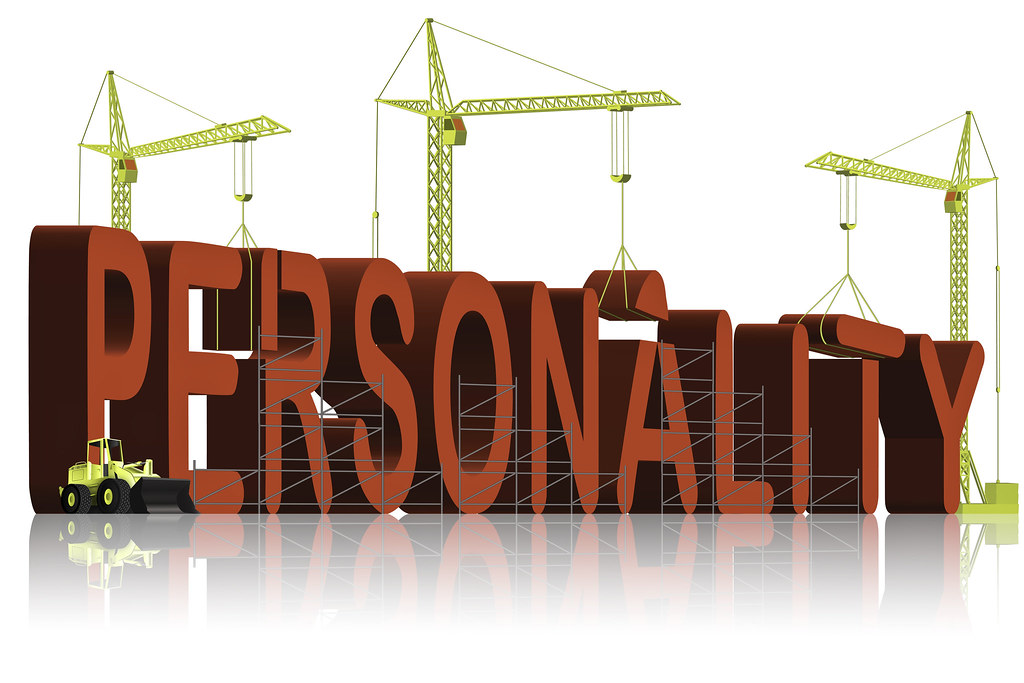
Guest Article- A sweet divorce with ethics (dissecting the crooked concept of personality)

Source: flickr.com


If a ‘personality guru’ was to be truly honest, he would be like "OK, i know we as a nation couldn't completely achieve what we dreamt about when we inserted that another word ‘socialist’ in our constitution; another glossy and appealing word. Nonetheless, we all can take our self-centred individual goals really seriously, OK? We pledge to relentlessly eulogize these ‘aims’, ‘dreams’ and just let the spirit of people like Freud frown who gave absurd theory about dream; cynical people, negative people.”

It is just incredulous how these self-acclaimed patrons employ this word ‘negative’ to toss away any meaningful insight into reality and just callously chuck away epistemological remarks in a similar fashion. Any other philosophical school of thought that may be displeasing to human souls, like absurdism and existentialism are meant to suck away ‘positive energy’; a mystical energy that is indispensable is you want pile up stacks of money.

Being a student of literature its really hard for me to undermine the value or power of characterization or simply put the varied characteristics of a human being that define him/her. Now there is a whole new terminology to define human beings, and a word that doesn’t miss each time is ‘personality’. It is more or less, an abstract entity that we barter in the corporate world to get ourselves a good pay, invariably this is devoid of any ethical understanding and is based upon the (un)sound principles of ‘efficiency’ and ‘productivity’. So, it isn’t surprising that it is the paramount in this modern capitalist setting, with its utter lack of sobriety.

This whole concept is aggressively marketed by all firms and of late, by educational institutions too. Proliferation of universities like IIPM and their rapid growth stands as a testimony to the fact that this whole concept devoid of ethics has a strong grip on our social imagination. Ramifications are more serious than they might appear to be, educational institutions are pushed to be more ‘efficient’ and ‘productive’ rather than a place of true learning or holistic development. The aversion to disciplines like cultural studies, humanities, etc. is the result of the same

**************************************************************************

Introduction

Nalil Sharma, Graduate, Bachelor of Arts (Hons) in English from Delhi University, Freelance writer

To submit article, photos or videos, write a mail to us at nishpaqsh@gmail.com or tweet to us @nishpaqsh. Like us on facebook: https://goo.gl/7I4CRi

Sunday, 2 August 2015

Full statehood to Delhi- (Dissecting the possibilities and impact)


Source: Yespunjab.com


White Hat- Facts and Figures

Delhi is neither falls under the category of a state, nor a union territory. However population of the city is more than 12 million, which is greater than many other states in the country. It is offcially known as National Capital Territory of Delhi.

Conferring the Balakrishan Committee references, the Delhi Metropolitan Council was substituted by the Delhi Legislative Assembly through the Constitution (Sixty-ninth Amendment) Act, 1991, followed by the Government of National Capital Territory (NCT) of Delhi Act, 1991.

The governing authority of the Indian national capital territory of Delhi is Government of Delhi and it has 11 districts. It consistss of an executive, led by the Lieutenant Governor of Delhi, a judiciary and a legislative.

Delhi state legislative assembly consists of 70 Members of the Legislative Assembly (MLAs), and it is unicameral. Chief Minister is the chief executive of the NCT. LG is Delhi's de jure chief of state, but de facto executive power rests with Chief Minister according to constitution of India.

Following elections to the Delhi Legislative Assembly, the lieutenant governor generally calls the party with a majority of seats to form the government. LG by the advice of President of India appoints the chief minister, whose council of ministers are jointly accountable to the assembly.

Except Public Order, Police and Land, the Delhi government has power to make laws on all the matters of the state list. According to the Police Act 1978, which is specially enacted for the National Capital Territory of Delhi, police commissioner works directly under the Lieutenant Governor. It is one of the largest metropolitan police forces of the world.

The demand of statehood for Delhi arose to the response to the short coming of Delhi administration act as no legislative powers were resided to metropolitan council. Although it enjoys the special status among all other union territories the demand of fully fledged statehood for Delhi is always on debate from past and is again the matter of top priority the current AAP government.


Yellow Hat- Optimism/Support

Analyzing the demand for full statehood by the AAP’s government is a palpable need which has been the disguised agenda of all the parties that have ruled Delhi. Ruling AAP is trying to rule Delhi through Lt. Governor, who acts as centre’s representative, holding significant powers as Delhi is a Union Territory and not a state.

States other than Delhi have full authority and control in all the matters of administration and government; whereas Delhi has no control on police,  land and public law and order. Apart from these vital functions, several other areas like civil arms of government that are under center can be administered by the state once the full statehood status is applied.

The full statehood demand by AAP is a demand to enjoy their jurisdictional rights to attain full control over Delhi as around 60 matters relating to municipal governance will be functioned by the state government that today cannot be administered without the Union government.

Municipal corporations always fight each other with over jurisdiction while avoiding their responsibility when there is a problem. And when monsoon arrives, all start blaming each other as there is no clear segregation of the authority between state and centre.

Delhi’s state government should be the one initiating all the decisions for Municipal Corporation. There are several implications attached with the conversion of Delhi into ‘Full statehood’, primarily related with finance and the government’s quality.

Delhi has a highest rate of subsidy from centre over other states. Most of the Infrastructural development in Delhi is financed by centre to a large extent. Delhi government can only raise its annual budget every year via its sources with the centre funding most prominent of all. This leads to biased approach when a different party comes in power ar the centre.

Currently Delhi state assembly can pass an amendment but requires an approval of Lt. Governor, The Ministry of urban development and the Ministry of home affairs to turn that amendment into a law. Therefore all the matters in a state should be controlled by state and not centre. The argument regarding full statehood to Delhi should cross the boundary of political parties and must be seen in national interest. The city expects a good quality of governance that is proportionate with India’s emerging status of modern and developed country.


Black Hat- Criticism

Delhi is more or less a city state and the National Capital of India. If Delhi is to receive full statehood it implies that the Central government will fall under state government’s administrative jurisdiction. So, the Central government will never allow a state government to control its offices, administration establishments and services.

So the first step in Delhi’s full statehood is bifurcation. It will not only be a geographical bifurcation but the services provided to the people of Delhi, development authority, water, police and everything will have to split up between the new full state and the central autonomous national capital.

After getting a full statehood, Delhi will not be eligible for government subsidies. Delhi gets major financial inputs from the center and after the full statehood it will have to rely on its own resources for growth. Delhi will have to pay for its Law and order costs, for Police, which Central government currently pays for. Its Budget will go high so the land rents, property taxes, and vehicle taxes, will increase; mounting pressure on Delhi’s “Aam Admi”.

Delhi as a full state will have to manage its own public transport system. Where will the money come from? It’s simple math, Delhiites will have to pay for it. Delhi’s life line, Metro, will either have to charge more or get subsidized. Public places, monuments stadiums are taken care by the central government at present, It will add to Delhi’s misery if it will have to bear their complete burden.

As a full state, if Delhi will have to buy power and water from other states, it cannot be subsidized. It will have to setup its own energy resources which will increase the production cost or it may have to buy power from other states, at market prices. A full statehood to Delhi means ruling party will have to charge more on power and other necessary facilities.

The Aam Admi Party’s demand of Delhi’s full statehood currently seems more of a political nature than practical. It must focus more establishing themselves as caretakers of Delhi and work in coordination with Central Government.


Green Hat- Creative Solutions

The question of statehood to Delhi has been raised time and again as both the major parties BJP and Congress have clamoured their support for giving Delhi assembly full control of the state administration. Henceforth, the demand by AAP is neither original nor unfamiliar.

The political gimmick going on since 1993 has only seen parties making promises of working towards it only to saunter away from the issue after coming to power. Thus, putting an end to exploitation of voters through spurious promises shall be a precedent.

The second most critical thing to do is to make the power distribution between Lt. Governor and the elected party clear. This shall be done in a way that a common person who is a resident of the state can acquire knowledge about the same and then judge any situation of disagreement between the ruling party and Lt Governor using his or her own wisdom.

Another solution which may seem a little incredulous is to transfer the onus of this decision to the actual people who will primarily be affected by it. A poll might help to know the stand of Delhi citizens and help the centre and the state government to chalk out a solution accordingly.

The controversy regarding control over police has preceded every other in Delhi lately. This situation can be dealt by simply implementing Supreme Court’s directive of granting functional autonomy to the police. In 2006, Honourable court had laid down seven directives for police reforms which included formation of a buffer body between police and government to ensure enhanced accountability of the force.

Now, perhaps the most important of all is to focus on other issues which demand urgent attention from the authorities and the government. Instead of exhausting all the energy on battling over statehood matter, the ruling parties should focus on improving the basic facilities in the national capital. The conventional issues of water and electricity scarcity, damaged roads and growing pollution level among a whole bunch are the issues which need to be solved first with peaceful coordination and understanding between the state government and the Lt Governor.


Blue Hat- Expert Interview

Akhilesh Tripathi, Aam Aadmi Party (MLA- Model Town)

Q) BJP also had the same agenda in their manifesto then why are you targeting them on the issue of full statehood?
A) The idea has remained in manifestos only, when it comes to BJP. The statehood should be provided so that the current honest government can handle the situation and direct Delhi on the way to progress.

Q) Full statehood would mean that Delhi will have to raise revenue on its own. Isn't that a grave challenge?
A) It indeed is, we can go ahead and invite investors and increase the revenue, plus the investment in certain areas but the case is very complex when it comes to Delhi. Reformations are necessary with time.

Q) It is very clear that police does not fall under the control of Delhi government according to existing rules. Perhaps that is why you are constantly trying to taint its image to attack the centre indirectly.
A) It is understood that Police does not come under the Delhi government but they should be answerable to the people and there should be a body to which the police report for proper implementation of law and order.

Q) Why can't your party coordinate with the centre or Lt Governor and work like other parties did in the past?
A) There have been incidents in recent time where issues were made out of nowhere, be it the appointment of officers or transfers. If Delhi becomes a state then only we can expect a lot of growth and development without any interference in the functioning of the government.


Red Hat- Public Opinion

Nithin Kothari, central government employee in Kolkata

Q) Why should Delhi be given full statehood?
A) Delhi should be granted statehood for the sake of its people. We are living in a suffocating condition in a cold tussle between the Centre and the Delhi Government. Let’s stop this power game, and accept the demand of the people.

Q) Do you think that it will affect law and order situation in anyway?
A) I hope that it will get better after Delhi gets a full statehood.

Ankita Chatterjee, Corporate Lawyer stays at Malkhaganj in Delhi 

Q) Why should Delhi be given full statehood?
A) I don’t think it is a legitimate demand of the people as Delhi is the capital of India.

Q) Do you think that it will affect law and order situation in anyway?
A) The time will tell the truth. But on the basis of the performance of other states, we can be assume that it will further deteriorate.

Q) Do you think that it is just a political stunt played by the parties to win votes?
A) People love power and if Delhi is granted the full statehood status then Arvind Kejriwal will become a national hero and his political future will be secured.

********************************************************************************

Introduction


Namit Hans, Former Alumnus of IIMC, Sub editor at catchnews.com, @HansNamit

Ayaz Farooqui, Alumnus of IIMC, Works at ABP News (Editorial), @ayazfarooqui

Prateek Kumar, Alumnus of IIMC, Worked at Steria India ltd., Interned at Newsgram.com, Doordarshan, Freelance Writer, @kprateek35

Arnab Mitra, Alumnus of IIMC, Works at Newsgram.com, @sabkathani

Erick Massey, Alumnus of IIMC, Interned at Delhi Press, Freelance Writer, @Masseyerick

Sanjay Kumar Bissoyi, Alumnus of IIMC, Columnist at Uday India, Orissa Post, @skbissoyee

Follow us on Twitter- https://twitter.com/nishpaqsh